
Buenos Aires starts late and ends late. Dinner rarely begins before 9:00 PM, theater performances usually start around 10:00 PM, and nightclubs do not fill up until well after midnight. Visitors arriving with the schedule of a European capital in mind may find empty restaurants at 7:00 PM and deserted bars at 10:00 PM. To truly understand what Buenos Aires offers after sunset, you need to adjust to the city’s rhythm.
And it is worth doing so. Buenos Aires is one of the best cities in the world to stay awake after dark. Its gastronomic, cultural, and entertainment offerings are so extensive and diverse that planning an evening can feel overwhelming without a starting point. This guide is that starting point.
Tango Dinner Show: The Most Complete Experience in a Single Night
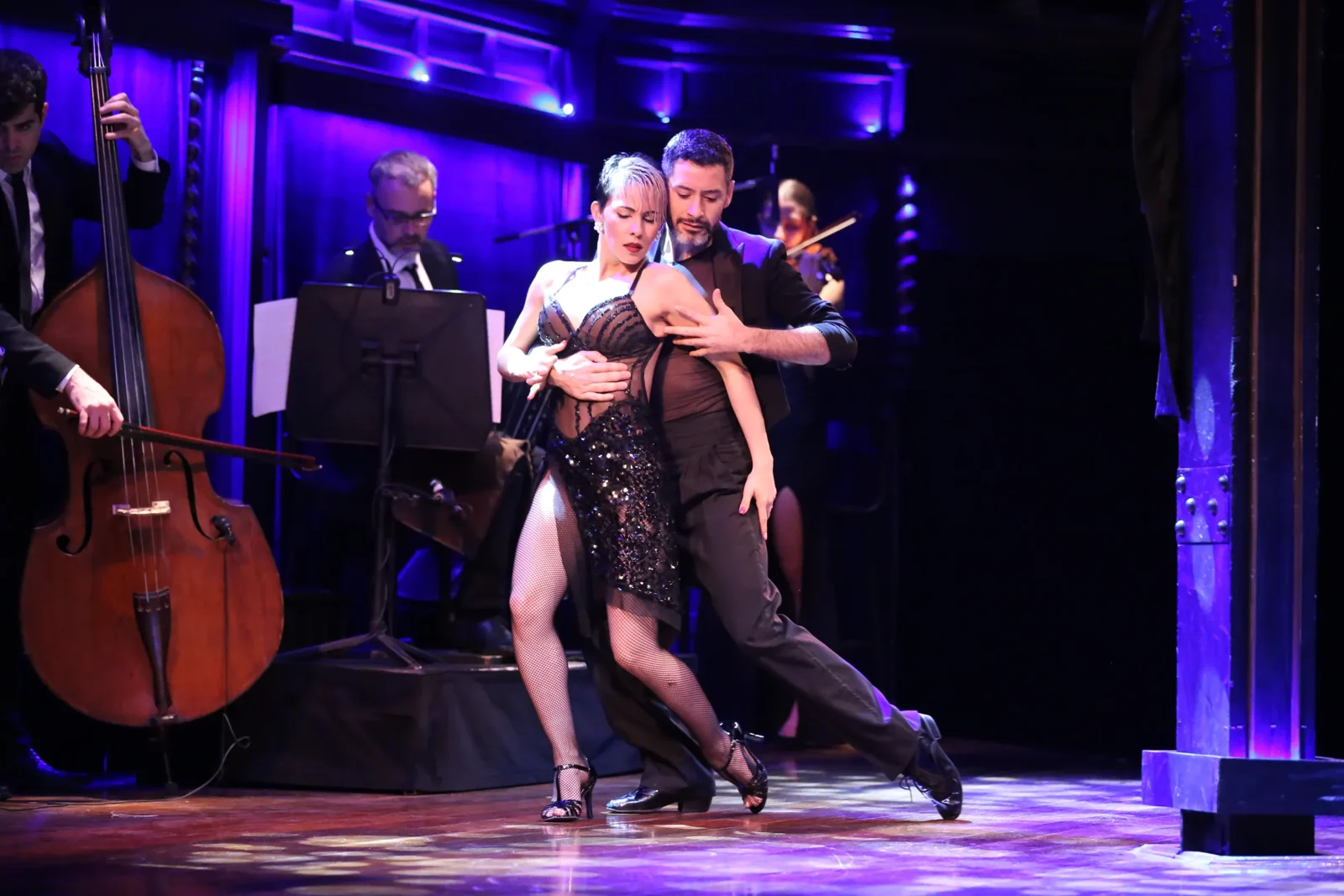
For visitors who want to experience the very best of Buenos Aires in a single evening—gastronomy, culture, live music, and history—a tango dinner show is one of the most rewarding options available. Not because it is quick, but because it combines more dimensions of Argentine culture in a few hours than almost any other experience in the city.
At El Querandí, located in the heart of San Telmo, the evening begins with dinner inside a late nineteenth-century building recognized as a Living Testimony of the City’s Cultural Heritage. The cuisine is contemporary Argentine, the wines are carefully selected from local producers, and the live performance that follows features musicians and dancers with decades of experience in Buenos Aires’ tango scene.
No previous knowledge of tango is required. The show is designed to tell the story of the genre from its origins to the present day, with Buenos Aires and its Historic Quarter serving as the natural backdrop. It is the kind of evening visitors remember long after their trip is over.
Theater in Buenos Aires: Latin America’s Most Dynamic Stage Scene
Buenos Aires has more active theaters per capita than any other city in Latin America and one of the highest concentrations in the world. Its theater scene includes prestigious public institutions, independent productions in hundreds of intimate venues, and a thriving stand-up and improvisation circuit that has expanded significantly over the last decade.
The Teatro Colón, located near Avenida 9 de Julio, is consistently ranked among the five best opera houses in the world. Guided tours provide an opportunity to admire the building during the day, but attending a performance is the only way to fully appreciate the venue. The season generally runs from April through November.
For independent theater, the neighborhoods of Abasto and Villa Crespo offer the highest concentration of venues. Watching a local play on a Tuesday evening in an eighty-seat theater, featuring a contemporary Argentine script and actors who also work in television, is part of what makes Buenos Aires unique.
Exploring the Nightlife by Neighborhood
Palermo: The City’s Most Diverse Dining and Nightlife District
Palermo—particularly Palermo Soho and Palermo Hollywood—has the highest concentration of restaurants, bars, and nightlife venues in Buenos Aires.
The culinary scene ranges from traditional steakhouses and contemporary Argentine cuisine to innovative Asian fusion restaurants. It is also home to many of the city’s acclaimed chef-driven establishments, featuring tasting menus, seasonal ingredients, and a strong focus on local products.
After dark, Palermo Soho becomes one of the liveliest nightlife areas outside the historic center. Streets such as Thames, Malabia, and Honduras are lined with wine bars, cocktail lounges, live music venues, and trendy gathering spots, all within walking distance of one another.
San Telmo: History, Tango, and Gastronomy
San Telmo offers a very different atmosphere from Palermo. It is more deeply rooted in history, richer in cultural heritage, and easier to explore on foot.
Its cobblestone streets, nineteenth-century architecture illuminated by vintage street lamps, and music drifting from bars and restaurants create an atmosphere unlike anywhere else in the city.
A perfect evening in San Telmo often combines a stroll through the historic district, a stop at one of its legendary bars, and a tango dinner show as the highlight of the night. On Sundays, the spontaneous tango dancing in Plaza Dorrego adds another attraction that requires no reservation and no admission fee.
Puerto Madero: Buenos Aires’ Most Elegant District
Puerto Madero is Buenos Aires’ newest neighborhood, developed from the city’s former docklands beginning in the 1990s.
It is home to some of the city’s most expensive restaurants, luxury hotels, and modern waterfront developments. At night, the reflections of illuminated buildings on the waters of the Río de la Plata create one of the city’s most sophisticated urban landscapes.
It may not be the most authentic representation of Buenos Aires culture, but for visitors seeking elegance, comfort, and international-level service, it is the most straightforward choice.
Live Entertainment and Evening Activities
Beyond theater and tango, Buenos Aires offers a remarkable range of nighttime entertainment options.
Visitors can enjoy electronic tango performances in Palermo, major concerts at Vélez Stadium, jazz sessions in intimate venues around Congreso, and late-night film screenings at the MALBA museum.
The live music scene is particularly active between September and April. Events such as Buenos Aires Jazz, the International Tango Festival held each August, and the electronic music festival Creamfields attract visitors from around the world.
For travelers visiting in August, the International Tango Festival may be the best time to experience the city. For ten days, tango spills into the streets through open-air milongas, free lessons, and public performances throughout Buenos Aires. El Querandí, which operates year-round, plays a special role during this period.
Practical Tips for Enjoying Buenos Aires at Night
The first adjustment most visitors need to make is timing. A dinner reservation at 9:00 PM is considered early in Buenos Aires. Most popular restaurants do not reach their busiest period until 10:00 or 10:30 PM.
If you arrive at 8:00 PM, you may enjoy exceptional service and a quieter atmosphere—but you will also notice that many locals have not yet left home.
Transportation at night has improved considerably in recent years. Ride-hailing apps and taxis are widely available, the subway system operates until around midnight on most lines, and major bus routes run twenty-four hours a day.
For traveling between neighborhoods after dark, taxis and ride-sharing services are generally the most convenient options.
As for safety, the main tourist areas of San Telmo, Palermo, and Puerto Madero are generally safe when standard precautions are taken. Keep bags close to your body, avoid displaying valuables, and remain attentive around ATMs. Buenos Aires is not Vienna, but it is not considered a dangerous destination for visitors who use common sense.
Frequently Asked Questions About Buenos Aires Nightlife
How Much Does a Night Out in Buenos Aires Cost?
Costs vary significantly depending on the neighborhood and type of experience.
A dinner at a mid-range restaurant in Palermo typically costs between ARS 15,000 and ARS 30,000 per person, including wine. A tango dinner show at El Querandí includes the complete dining experience. Independent theater tickets can often be purchased for as little as ARS 5,000. Entry to some Palermo nightclubs may be free before 2:00 AM with advance registration or guest-list access.
What Should I Reserve in Advance?
The most popular restaurants in Palermo and San Telmo, performances at Teatro Colón, and tango dinner shows such as El Querandí should ideally be booked ahead of time.
Most other activities can be organized on the same day. During peak tourist season (December through March), reserving a tango dinner show 48 to 72 hours in advance is highly recommended.
Is Buenos Aires Safe at Night?
The tourist neighborhoods mentioned in this guide are generally safe for nighttime exploration when basic precautions are followed.
Buenos Aires maintains a visible police presence in areas with high levels of nightlife activity. The most common concern is opportunistic theft rather than violent crime, which can largely be avoided by keeping valuables out of sight and remaining aware of your surroundings.
What Makes Buenos Aires Nightlife Different from Other Cities?
Its human scale and cultural diversity.
Within a single block in San Telmo, you might encounter a tango bar, a contemporary art gallery, a Peruvian restaurant, and a traditional milonga. This cultural density—where popular traditions and sophisticated artistic expressions coexist naturally—is one of the defining characteristics of Buenos Aires.
A City That Comes Alive After Dark
Buenos Aires offers something that very few cities can match: there is no single correct way to experience its nightlife. Tango, theater, gastronomy, live music, and neighborhood culture all coexist without competing with one another.
The one thing almost every plan has in common is timing: if you arrive before 9:00 PM, you have probably arrived early.
For travelers looking to begin with the experience that captures the greatest number of Buenos Aires traditions in a single evening, a tango dinner show at El Querandí, located in San Telmo’s Historic Quarter, is one of the most meaningful places to start.