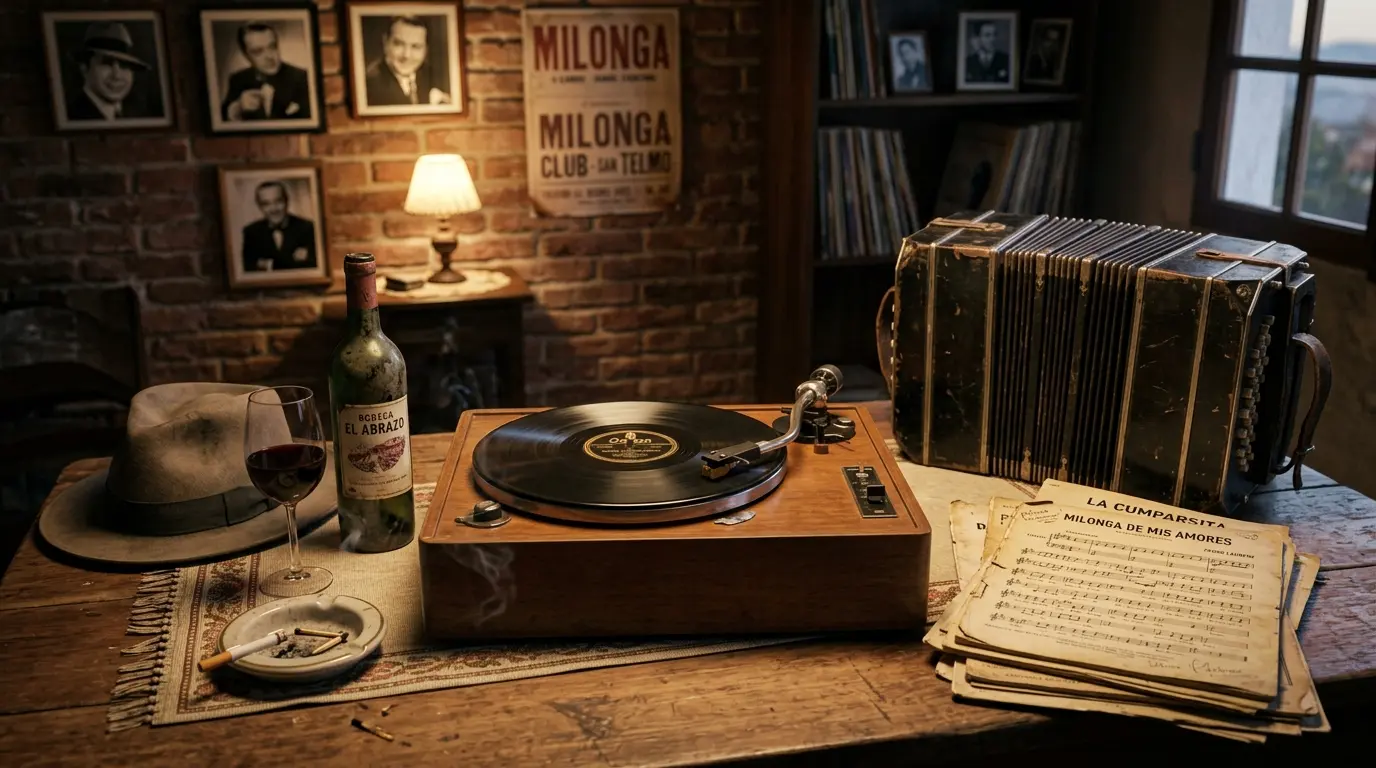
Talking about the top 10 most famous tango songs means entering one of Argentina’s most important musical traditions. Some compositions moved far beyond the dance floor and became symbols of Buenos Aires, while others became permanently associated with legendary singers and composers.
There is no single definitive ranking, but these ten tango classics offer a journey through different periods, styles and ways of understanding the genre.
Ten classic tango songs to start with
- La Cumparsita. Written by Uruguayan composer Gerardo Matos Rodríguez, it became one of the most recognizable tangos in the world and an essential part of the tango repertoire.
- El Choclo. Composed by Ángel Villoldo, this piece belongs to the early history of tango and played an important role in the genre’s development.
- Mi Noche Triste. Carlos Gardel’s interpretation gave this song a central place in the history of tango canción and in the development of tango as a song-based genre.
- Por una Cabeza. With music by Gardel and lyrics by Alfredo Le Pera, it became one of the best-known Argentine tango melodies internationally.
- Volver. Another collaboration between Gardel and Le Pera, this tango became a classic through its memorable melody and themes of return, memory and nostalgia.
- Caminito. Written by Juan de Dios Filiberto with lyrics by Gabino Coria Peñaloza, it became permanently connected with one of Buenos Aires’ most emblematic places.
- Uno. Composed by Mariano Mores with lyrics by Enrique Santos Discépolo, it captures the emotional intensity that defines tango canción.
- Naranjo en Flor. Written by Virgilio and Homero Expósito, it became a classic performed by generations of tango singers.
- Sur. With music by Aníbal Troilo and lyrics by Homero Manzi, the song evokes porteño identity, neighborhoods and nostalgia.
- Adiós Nonino. Astor Piazzolla expanded the language of tango with this deeply personal and emotional composition.
From classic tango to modern tango
This selection shows that tango music never remained static. From early compositions to Piazzolla’s innovations, the genre incorporated new sounds, structures and ways of interpreting the city.
Learning about tango classics, therefore, is not simply about looking at the past. It means understanding the foundations of a musical tradition that continues to evolve.
Experiencing tango music in Buenos Aires
A tango music list can introduce you to the genre, but hearing tango live creates a completely different experience. At El Querandí, the performance travels through different moments in tango history, accompanied by a live quartet featuring piano, double bass, bandoneon and violin.
In Buenos Aires, tango is not only something you listen to. It is something you experience.