
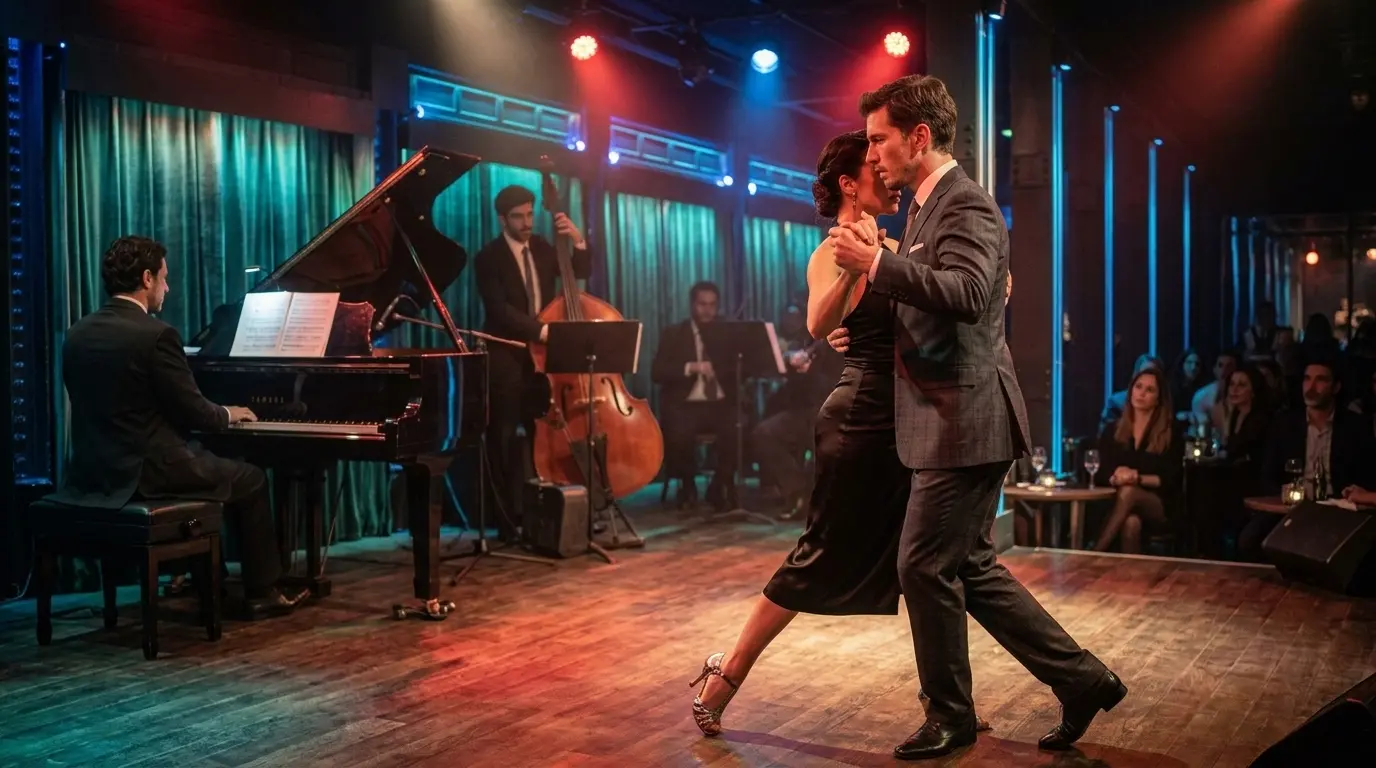
Learning how to dance tango can seem difficult when you watch an experienced couple move across the floor. However, you do not need to know a long list of figures to begin. Tango starts with something much simpler: walking, listening to the music and learning to share movement with another person.
The embrace: the starting point
One of the essential elements of learning to dance tango is the embrace. It is not simply a body position; it is the way partners establish connection and communication.
The embrace can be close or more open depending on the style and the dancers’ preferences. For beginners, comfort, balance and a stable connection are more important than trying to achieve a perfect position.
Posture and walking before learning figures
Before memorizing tango steps names, it is useful to learn the basic walk. Walking provides the foundation for many other movements.
The first goal is to move with balance, maintain the rhythm and control each movement. Tango does not need speed to be expressive. A calm, controlled walk can communicate musicality and elegance.
What are the first tango steps to learn?
For beginners, it is more useful to master weight changes, walking and pauses before attempting complex figures. Basic movements such as the salida, turns and ochos can then be introduced progressively with the guidance of an instructor.
Rather than memorizing a fixed sequence, the goal is to understand how each movement is proposed and interpreted.
Listen to the music and learn to connect
Learning to dance tango also means learning to listen to tango music. Rhythm, pauses, changes in intensity and musical phrasing all influence the way dancers move.
You do not need previous dance experience. With practice, each person gradually develops better balance, confidence and musical interpretation.
For a first class, comfortable clothing and stable shoes that allow freedom of movement are the best choice.
At El Querandí, visitors discovering tango for the first time can see how live music, singing and dance come together in a stage experience. Watching professional dancers can also reveal that tango is not only about learning movements. It is about learning how to listen, walk and connect.