
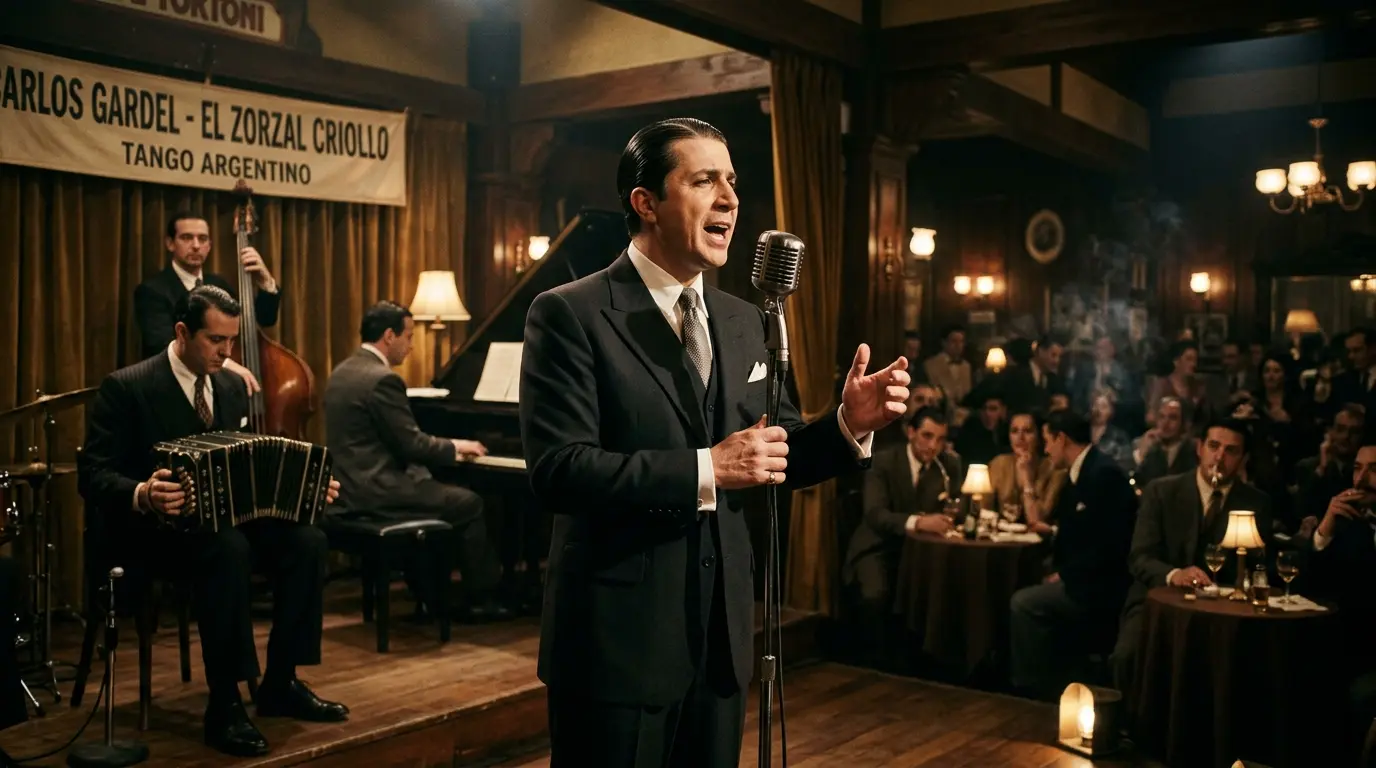
Few figures are as closely connected with the identity of tango as Carlos Gardel. His voice, films and songs helped transform tango canción into a cultural phenomenon that moved far beyond Buenos Aires and reached audiences around the world.
Yet one question continues to attract attention: where was Carlos Gardel born?
Where was Carlos Gardel born?
Gardel’s birthplace remains the subject of a long-standing historical debate. French documentation states that he was born in Toulouse, France, in 1890. At the same time, another historical position supports the theory that he was born in Tacuarembó, Uruguay.
What is widely documented is that Gardel grew up in Buenos Aires and developed much of his artistic career there. The city played a fundamental role in shaping the artist who would become one of the most important figures in Argentine music.
Gardel and the rise of tango canción
Gardel was more than a tango singer. His way of interpreting lyrics helped establish a new relationship between audiences and the genre.
Tango canción brought stories of love, nostalgia, neighborhoods, farewells and everyday characters to the center of the music. Gardel’s performances transformed these stories into emotions that audiences could recognize across borders.
His career also expanded into cinema. He appeared in films including Luces de Buenos Aires, Cuesta abajo, El tango en Broadway and El día que me quieras, giving his artistic image an even wider international reach.
How did Carlos Gardel die?
Gardel died on June 24, 1935, in an airplane accident in Medellín, Colombia. He was 44 years old.
His death transformed him into a legendary figure. Decades later, his songs remain part of the essential repertoire of tango and Argentine music.
Gardel and the Buenos Aires tango experience
Understanding Gardel’s career means understanding one of the most important stages in tango history: the moment when the genre moved beyond being a local musical expression and became an internationally recognized cultural phenomenon.
At El Querandí, this period is part of the show’s artistic journey through tango history. Gardel therefore appears not simply as an isolated icon, but as part of a musical tradition that remains alive in Buenos Aires.