
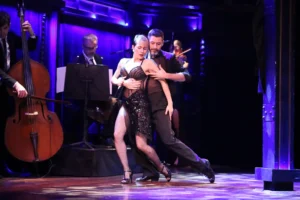
Tango origins are closely connected to urban life in the Río de la Plata region. In the late nineteenth century, Buenos Aires and Montevideo brought together communities with different customs, musical traditions and ways of dancing. Through those encounters, a form of expression gradually developed that is now recognized for its embrace, melodies and stories about everyday life.
Learning about the history of tango can change the way you listen. Behind a performance are migration, cultural exchange and a changing city. For visitors to Buenos Aires, exploring those roots also helps explain why tango still belongs to theatres, social gatherings and conversations today.
Where did tango come from?
Tango developed in the Río de la Plata region, with Buenos Aires and Montevideo playing central roles. Although the term Argentine tango is widely used for an internationally recognized tradition, Uruguay is also part of that history. Describing tango as the isolated invention of a single city would leave out an important part of its development.
There is no exact birthday for tango, and no single person can be identified as its inventor. It emerged gradually through musical and social practices. The question of where tango originated is best answered by looking at a region and a historical process, rather than choosing one date or one creator.
The communities behind tango culture
European immigrants, people of African descent and local criollo communities lived alongside one another in the port cities. Their encounters helped shape tango culture. This background explains why its roots cannot be reduced to one tradition or understood through an exclusively European account.
Milonga, habanera and candombe belong to the musical context associated with that development. Their relationships with tango reflect movement and transformation, rather than a fixed recipe of influences. Listening to these genres provides clues to the musical world in which tango emerged, without treating them as interchangeable forms of the same music.
Tango and everyday life in Buenos Aires
The history of tango is also linked to places where people gathered.. Courtyards, cafés and dance halls gave musicians and dancers opportunities to share repertoire and approaches to performance. As newcomers changed the city, these gatherings helped create relationships and a sense of belonging.
The arrabal often appears in tango imagery. The word refers to the urban outskirts and to experiences later expressed through music and poetry. Tango did not remain confined to that setting, however. It reached different audiences, entered new spaces and developed a wider range of artistic possibilities.
In the early twentieth century, the arrival of the bandoneon, an instrument of German origin, gave the genre one of its most recognizable sounds, and works such as La cumparsita (1917), by Uruguayan composer Gerardo Matos Rodríguez, became emblems of that era.
To notice that connection today, look at how historic buildings, cafés and cultural activities exist alongside one another. Tango in Buenos Aires still takes place in different settings. A stage performance and a social dance gathering each reveal particular aspects of a tradition passed on by the people who take part in it.
Music, dance and poetry in tango
Tango can be heard, danced and sung. Each dimension offers a different way to connect with its stories. An instrumental performance draws attention to musical detail, singing adds words and characters, and dancing turns listening into movement shared between two people.
Lyrics often explore love, absence, neighbourhood life and the passing of time. That does not mean every song tells the same story. Different perspectives and emotional registers help explain why tango remains an important part of Argentine music and continues to invite fresh interpretations.
During a performance, watching the relationship between the artists can make that combination easier to understand. A musical pause may change the movement of a couple, while a voice shifts the mood of a scene. You do not need to recognize song titles or understand technical vocabulary to notice those choices.
This is also a useful approach for a first visit. Rather than trying to identify every historical reference, you can follow the conversation between the performers. Listen to how a phrase ends and watch how the dancers respond. The meaning of the experience grows through the details unfolding in front of you.
Why tango is cultural heritage
In 2009, tango was inscribed on UNESCO’s Representative List of the Intangible Cultural Heritage of Humanity through a joint nomination by Argentina and Uruguay. That recognition concerns a living practice maintained by communities, as well as the repertoire inherited from earlier generations.
This perspective includes musicians, dancers, composers, teachers and other participants. Tango’s continuity depends on transmission, the places where it is shared and opportunities to reinterpret it. Preserving the tradition also means allowing new generations to develop their own relationship with it, rather than expecting every performance to reproduce the past.
Discover tango history at El Querandí
A show offers one way to encounter this history through music and performance. At El Querandí, the production takes audiences through different periods of tango in a building in Buenos Aires’ historic centre. The setting connects what visitors hear with a place associated with the city’s memory.
If you would like to experience tango in Buenos Aires from that perspective, explore El Querandí’s offering and choose your evening. Book through the website to include live performance and the history of the Río de la Plata in your visit.