
Before booking, there’s always one question that comes up: what is it actually like? Not in terms of price or schedule, but in terms of experience. What happens when you arrive, how the night is organized, what you eat, when the show starts, how it all ends. The things you want to know in advance so you can arrive relaxed.
This article is the answer to that question. A chronological walk through what a full tango dinner show night at El Querandí is like, without leaving out the details that make the experience work.
Before You Arrive: What’s Worth Knowing
El Querandí is located in the Historic Quarter of San Telmo, on Perú Street, a few blocks from Plaza de Mayo. It’s an 1860 mansion with its original façade preserved. If you walk through the neighborhood at night, you’ll recognize it even if you’ve never been there: it has that presence that buildings carry when they know exactly how old they are.
The show has a fixed schedule. Dinner begins earlier so there’s time to eat without rushing, enjoy the atmosphere of the dining room, and be settled at your table when the music starts. The ideal is to arrive at the time confirmed when you book, without too much advance or delay. The rhythm of the night is designed so everything flows.
If you’re coming from another neighborhood, plan your travel carefully. San Telmo is well connected by taxi or private car, and there’s a subway stop (Line C, San Juan station) a few blocks away. Arriving late isn’t ideal because the dining room is organized before the show starts, and there are things you’ll miss if you walk in after it’s already begun.
The Arrival: The Space’s First Impact
When you cross the threshold of El Querandí, there’s a moment of adjustment. It’s not a modern restaurant, it’s not a conventional theater. It’s an old mansion that retains its dark wood boiserie, its solomonic columns, a bar that has more years behind it than any new building in the city.
The restoration was done with care: nothing was modernized that didn’t need to be. That has a concrete effect on everyone who walks in: the space slows you down. Your head is still out on the street for a moment, but your body has already settled into another time.
The staff greets you and takes you to your table. The tables are well positioned: there are no blind spots, no columns blocking the stage. The layout of the dining room was designed so the show reaches you equally from any point in the room.
Dinner: Eating Well Before the Show
The menu explores the most representative flavors of Argentine cuisine. It’s not a seasonal tasting menu or a fusion concept: it’s the cooking that defines this country, executed with the right ingredients and techniques. Rib-eye steak, empanadas, locro stew in winter, classic desserts like bread pudding or flan with dulce de leche.
The wine list is exclusively Argentine, featuring labels selected from the country’s main wine-producing regions: Cuyo, Northeast Argentina, and Patagonia. Wines that know their role well: to accompany without overshadowing, to prepare the palate for what’s to come.
The pace of dinner is calibrated. They don’t rush you, but it doesn’t stretch longer than necessary either. There’s time to talk, to order one more glass, to settle into the ambiance of the room. When the show is about to start, the service withdraws discreetly and the space transforms.
The Show: A Century of Tango in One Night
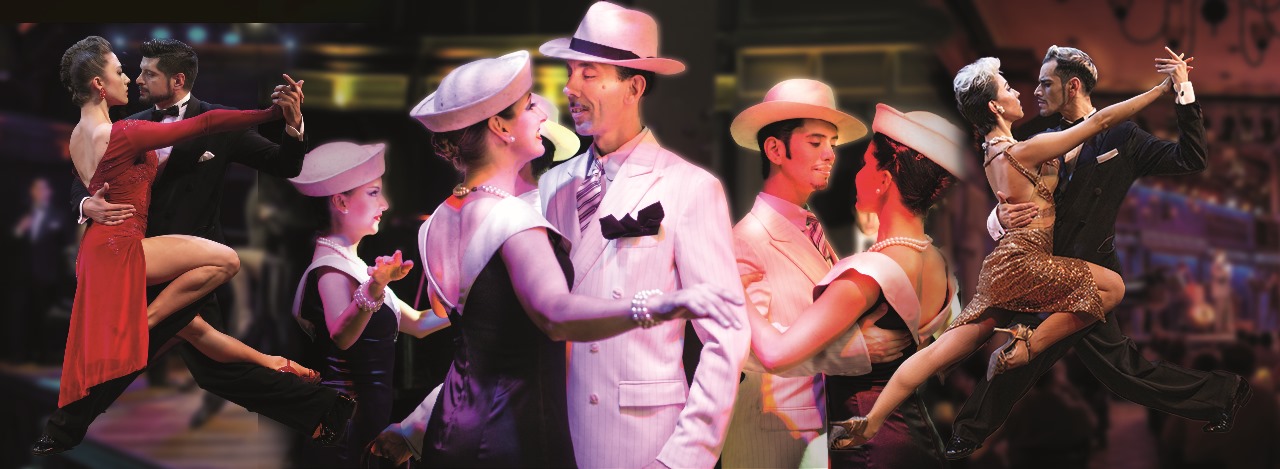
El Querandí’s show is not a succession of disconnected numbers. It has a narrative structure: it tells the story of tango from its origins in the late 19th century, through the golden era of the 1930s and 1940s, and into contemporary tango. Each moment has its own music, its own dance style, its own context.
The musical backbone is maestro Ado Falasca’s live quartet: piano, double bass, bandoneón, and violin. This is not recorded music, not a backing track. It’s a quartet of musicians on stage playing each night as if it were the first.
The vocals are performed by Carlos Gari and Gabriel Mores. Gari was the lead voice of Leopoldo Federico’s orchestra; Mores is the grandson of Mariano Mores and was part of his orchestra. They are not filler performers: they are part of the reason this show has the level it has.
The dancers move through the different styles of tango over the course of the night: the canyengue of the origins, the salon tango of the forties, the stage tango with its more demanding technique. Seeing that evolution in a space of these dimensions, just meters away, is a very different experience from watching it in a large theater where everything feels distant.
The mansion’s natural acoustics do their part: the sound of the bandoneón reaches every corner cleanly without needing excessive amplification. That’s something you notice, even if you’re not quite sure why.
The Close: How the Night Ends
The show lasts approximately an hour and a half. When it ends, the room is yours again. You can stay for another drink, close the night with dessert, order one last glass of wine. There’s no moment where anyone pushes you toward the exit.
What does happen, almost always, is that people leave wanting to talk about what they saw. The show leaves something behind: an image, a scene, a piece of music that keeps playing in your head once you’re back on the street. That’s hard to manufacture and it’s what separates a night you remember from one you don’t.
If you come with people who had never experienced tango before, they’ll likely leave with questions. Who are the musicians, what’s the difference between the styles, where does the bandoneón come from. Tango has that particular quality: when you see it live and done well, it generates curiosity.
Who This Night Works For
El Querandí’s experience isn’t designed for a specific type of person. It works for a couple looking for a different kind of evening, for a family with adults who wants something special for visiting guests, for a group of friends who wants to step outside the usual, for executives entertaining international clients who need a plan that won’t disappoint.
It also works for someone who lives in Buenos Aires and has simply never made the time to go. It’s one of those places porteños know by name but haven’t always visited. And when they do go, they tend to wonder what took them so long.
Want to Experience It in Person?
Reservations are made online and secure your place in the dining room. Choose your date, fill in your details, and you’re set. The rest of the night is on us.
Reserve your place at El Querandí →
Frequently Asked Questions About the Tango Dinner Show at El Querandí
How long does the full night last (dinner + show)?
The complete experience lasts approximately three hours. Dinner takes up the first part of the evening — with plenty of time to eat without rushing and enjoy the atmosphere of the dining room — and the show lasts around an hour and a half. After the performance ends, you’re welcome to stay for another drink without being rushed.
What is included in the dinner show?
The dinner show includes admission to the performance and dinner with an à la carte menu. Wines and drinks are selected separately from the restaurant’s wine list. When you book, you’ll be informed of the details of what each available option includes.
Do I need to know about tango to enjoy the show?
No. The show is designed for all kinds of audiences, including those who have never seen tango live. The narrative structure of the performance — which traces the history of the genre from its origins — makes it easy to understand and enjoy with no prior knowledge.
Can I bring children?
El Querandí welcomes all types of family groups. The show is suitable for all audiences. We offer special children’s menus. Please let us know at the time of booking. Children aged 0 to 2 do not pay. Children aged 3 to 12 pay 50%.
How far in advance should I book?
During high season (December through March and July), it’s advisable to book at least a week in advance, especially for Fridays and Saturdays. In low season, a few days’ notice is usually enough. If you have a specific date you can’t change, the safest approach is to book as early as possible.