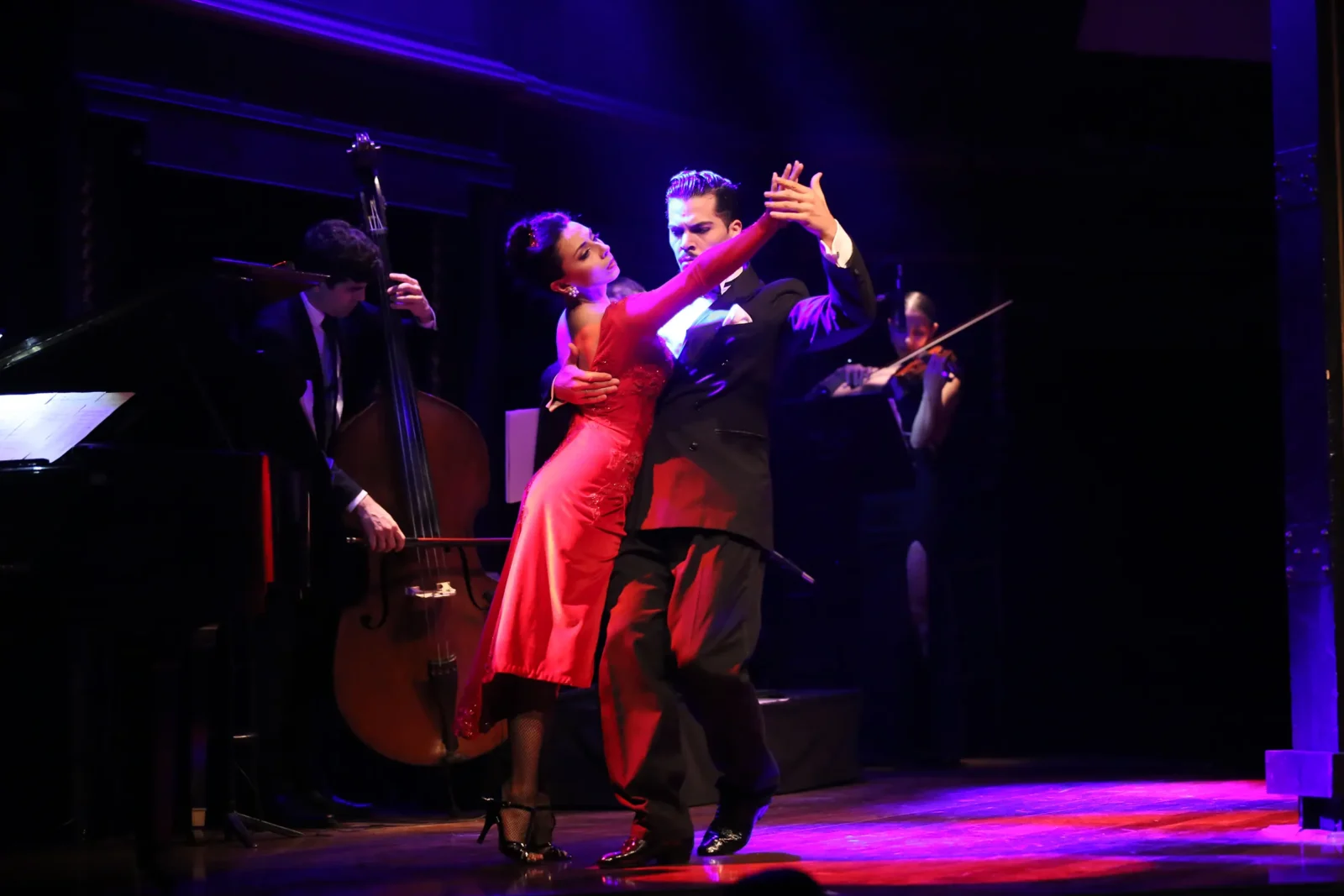
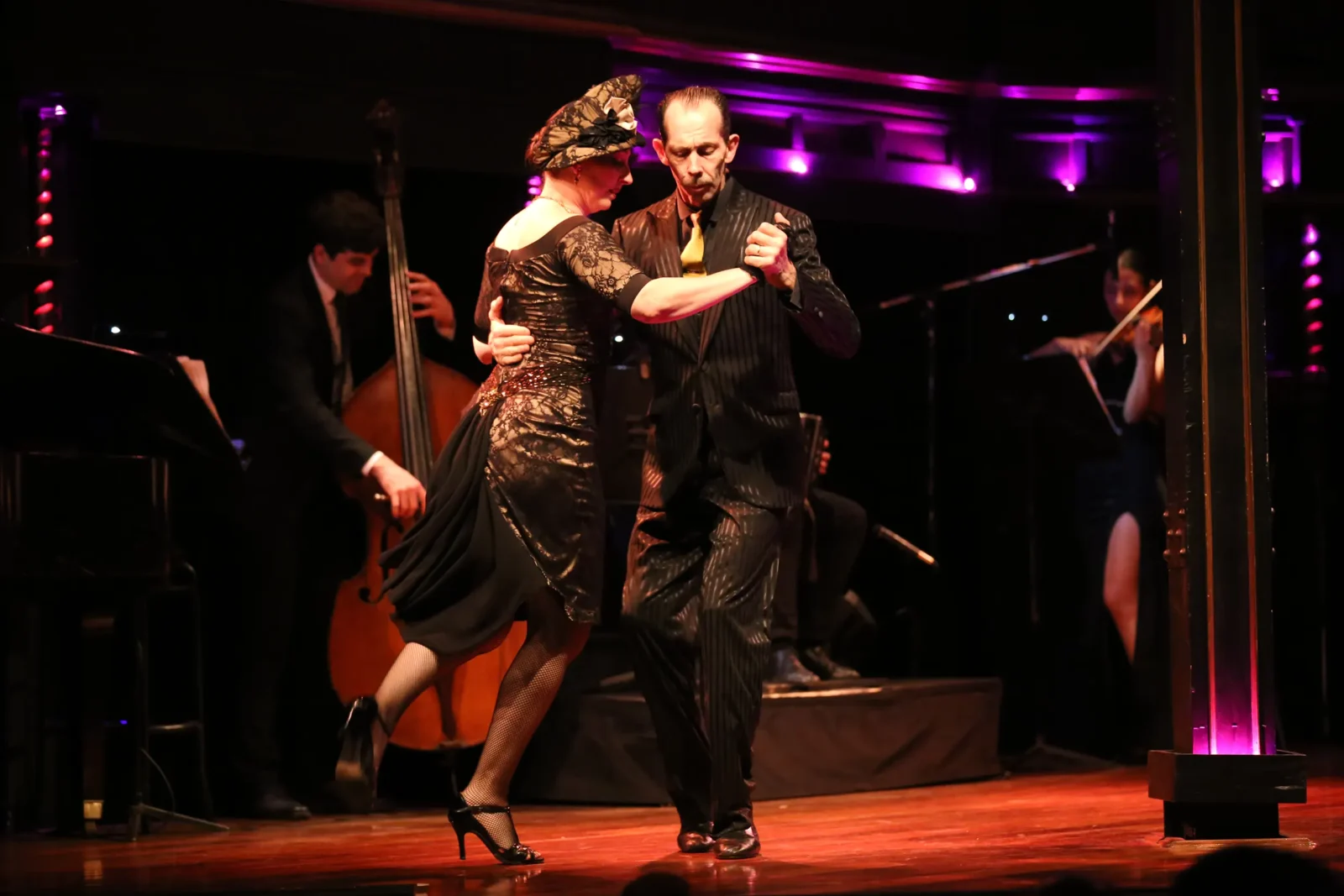
“Tango is only one, but it has a thousand faces. To discover its styles is to understand how the city changed its way of walking throughout the century.”
When someone steps into Buenos Aires for the first time looking to immerse themselves in the porteño night, they often encounter a surprise: what is danced in a neighborhood milonga is not identical to what is seen on the great stages of Corrientes Avenue or here, in the heart of San Telmo.
The “2×4” is not static; it is a living organism that has mutated decade after decade. Today, we want to guide you through the different styles of tango, so that when you see a pair of legs drawing ochos on the floor, you know exactly what story they are telling you.
How many tango styles are there?
If you wonder how many styles exist, there isn’t a single number. Tango has evolved alongside Argentine society. From the mud of the outskirts to the salons of Paris, each era left its mark on the way we embrace and walk. However, to understand this universe, we can group them into the currents that defined our identity. It’s not just about steps; it’s about intention. As the musical style changed (from flute and guitar to the bandoneón), the dance had to adapt.
Main Argentine Tango Styles
- Tango Canyengue: The playful origin. Prior to the 1920s, with a “V” shaped embrace, bent knees, and rhythmic movements.
- Tango Salón: The elegance of the ballroom. As tango moved to the city center, it became refined, prioritizing posture and the “line of dance” (moving counter-clockwise).
- Tango Milonguero: The art of the “apilado” (leaning). Born in crowded 1940s clubs, it features a close, chest-to-chest embrace meant for small spaces.
- Tango Nuevo: Breaking the form. Since the 90s, it explores physics and fluid movements, often danced to electronic tango.
Salón vs. Stage Tango
Tango Salón is introspective and improvised; you dance for yourself and your partner. Stage Tango (Fantasía) is extroverted and choreographed; it includes jumps, tricks, and ballet-like technique designed for the spectator.